Category: regulation

  • Who Owns The Codes? The Sound and Ownership of Music in the AI Age

    Preamble

    Early in 2024 I was asked to contribute a chapter to the IAEL’s book on AI in music. It was an honour to be asked, and a significant effort to deliver something that I felt would not waste the readers’ time by adding to the torrent of ill-informed texts about this curious subject. Curious, because at no point have I heard anyone complain about the paucity of supply in music; quite the opposite. As a supremely human endeavour, music sits uneasily within the framework of capital and production for profit. AI promises to remove the human, and the endeavour, so that the gains can all accrue to capital. Why we should give this idea the time of day I find baffling, and the knowledge that our elected representatives here in the UK are seriously contemplating lifting one of the great achievements of the Enlightenment – copyright in creative work – to grease the extruders is profoundly depressing.

    I set off at a clip, and by the third delayed deadline and some excellent editing had delivered a shortened version of this text. Some of the shortening took out references to interesting music produced along the timeline of music’s interaction with systems and ultimately with computing, of which generative AI is arguably a continuation. The IAEL is now no doubt working on another publication of equal importance to the music industry, and I can with confidence recommend whatever they produce as I know it is the product of a very thorough, well informed, and humanistic process. So with broader interest in music and AI probably peaking here in the UK I am taking the opportunity to evade my editors and publish my first version.

    Introduction

    AI and music is a big subject. I propose here to discuss some of the concepts and foundational methods behind using AI to generate music. I will ask how we can know about the sources that have been reworked into new music by generative AI. Finally I will consider some of the impacts we will very likely see on culture and the music industry, including how we might need to rethink some of our ideas about creativity, ownership, and attribution.

    AI is already used widely in music for other things, some of which are certainly interesting and useful. Recently AI extracted a John Lennon vocal track from an old mono cassette demo, and gave us an unexpected and unprecedented new Beatles single. And AI is smoothing out human fallibilities in pitching and phrasing on many new recordings, and helping deliver industry standard mixing and mastering. Assistive technologies raise very different questions however; we see far greater cultural, legal, and economic challenges when AI itself makes the music.

    First the usual warning! IANAL – I am not a lawyer, but I do have over 30 years broad and active experience in the digital music industry. And for another acronym – TLDR – here’s where I think we will land. I certainly don’t foresee wholesale destruction of either musicianship or the economics of making records; the value of these is not just an affective waveform, but rather a complex bundle of culture and identity alongside the traditional music making and recording skills. And that suggests that we will find ways to recognise and reward human creativity when it uses and is incorporated in new computer generated music.

    Sonification of Code

    To understand how generative AI can make music we need to start with an idea of how music can be understood in terms of codes and rules. People have been using codes to generate music probably for millennia. Anyone who been through a western music education will have learnt many sets of rules, such as those which underlie fugue and counterpoint. Some prominent composers played with their understanding of rules and chance. One thinks of Mozart’s ‘Musikalisches Würfelspiel’ (Musical Dice Game), where a roll of the dice selected precomposed bars. Outside of the western music, traditional forms such as raga and gamelan are essentially heuristics performed by musicians. 

    Instruments such as the barrel organ and player piano, which performed mechanical representations of music, were transformative, helping sophisticated music reach further than could have happened solely with trained musicians. It was not just that the machines could be operated by an untrained musician; they could also play music that was beyond human capability.  Rendering the mysteries of music as a sequence of pins or holes in a roll of card must have suggested the possibilities inherent in applying maths and geometry to expand what could be created. This characteristic was exploited to the full by Conlon Nancarrow in his Studies for Player Piano. For a fun example, track down Study for Player Piano No. 3a, which is, to my ears, remarkably similar to early generative, or AI music, featuring manic boogie woogie motifs.

    It was the introduction of the computer that blew the lid off what had until the mid 20th century seemed the rather constrained field of mechanised music. The digitisation of music in western culture, as notation, chiptunes, and later as MIDI data, made the rules inherent in music much more observable. Advances in digital signal processing during the 1990s showed that audio files containing music could be analysed and musical information extracted, starting out with pitch, onset, and duration of sounds. Early computers could be applied to algorithmic composition, picking up on the idea of music as the product of heuristic or stochastic processes.

    So this approach treats music as essentially a sonification of codes, and there are some quite wild examples. The fruitful interchange between modern classical practice and the computer music labs that started to be built in the second half of the 20th century looks almost like a ‘scene’. Alvin Lucier for instance mapped brain impulses to electronic instruments, producing a percussive soundtrack to perception, thought, and feeling. Another academic composer, Xenakis, was among the most strongly identified with computer software as a compositional tool. It’s an important distinction that Xenakis was not looking for creativity in the algorithms that assisted in his composition. Instead he considered the computer as a way to express through the medium of orchestral music the mathematical concepts he was familiar with. Later he developed software that could turn his drawings into sound, enabling him to use in composing the skills he had developed as an architect.

    Beyond the Code: How Generative AI Works For Music

    Contemporary applications of AI in music are much more sophisticated in how closely they emulate what we think of as ‘human’ made music. And they generate music that aces the Turing test. Given how good humans are at making and following rules, that’s perhaps not so surprising. But when we can’t tell whether the pilot’s hands have ever touched the rudder, that seems to me a step change.

    Many aspects of our cultural and economic life have been disrupted by the rapid global development of digital and communication technologies over the last 35 years, and the academic field known as MIR – Music Information Retrieval – is no exception. The ability to make huge collections of recorded music available digitally, to apply powerful computing resources to analysis, and quickly share the resulting codified data sets, catalysed the explosion of ‘generative’ AI that we are now in the middle of.

    To understand better the impact AI will have on music, the music industry, and music culture, it helps to understand something of how those black box algorithms can churn out tunes.  With sincere apologies to the scientists and researchers whose work actually powers these extraordinary advances, here’s a very brief and sketchy overview of how generative AI works for music.

    The sounds and patterns we perceive in music can be extracted from a corpus of compositions and recordings, and expressed as a set of probabilities. Some of the basics are easy to codify – pitch, basic timing blocks such as beats and bars. Different instruments can be separated out, and their roles understood, which enables the more properly ‘musical’ features such as melody, rhythm, and harmony to be delineated. Higher level structures such as verse, chorus, bridge, etc., emerge out of further analysis. Commonalities between different works and recordings can be clustered, creating sets which are analogous to genres, styles, and modes. Hierarchical sets of features further define the differing eras and traditions, enabling automated differentiation between similar sets of instruments used in different ways.

    These models can be thought of as the vocabulary and grammar of the language of music, but of course without the meaning that natural human languages carry. In data terms the music has been separated out into tokens, the sequential relationships between the tokens have been inferred and stored, and the inference used to improve subsequent performance of the algorithms. The software machines that do this work are known as ‘transformers’. Recent advances have been driven by the discovery that adding more parameters and more transformers hugely improves the models that can then be used to generate output. In some ways this is similar to the way computers understand images, as a grid of pixels; the image gains fidelity the more gradations in colour and brightness there are, and the denser the pixels are packed. At a threshold human perception loses the ability to see the degradation, and just sees the image. Similarly with generative AI, adding vast complexity nudges the performance up to the point where we humans simply can’t differentiate between ourselves and robots.

    In AI music analysis and generation, as in other applications, this phase is known as ‘training’. Any corpus of music, which in the AI field is known as a ‘training set’, can thus be rendered as a set of descriptors, along with the probability that each musical idea or motif will happen at a given point in a piece. The result in AI terminology is called a ‘foundation model’. Prompt the foundation model with some terms that are strongly associated with a particular form or style of music and out comes what you might call a statistically probable fugue, or rockabilly song, or eurodisco track. Or a guitar part, or drum track, or string section to supply what would otherwise be provided by a musician.

    All very interesting, but if audiences don’t rate the results the whole enterprise remains, literally, academic. Early computer music did indeed sound pretty inhuman. The micro-timings and weights in human performance, and the infinite timbral spectrum of the voice and acoustic instruments were not easy to emulate. Perhaps encouraged by the market’s reaction to his Ambient series of recordings, in the mid 1990s Brian Eno produced and released his ‘Generative Music 1’, using software created by Tim Cole & Pete Cole at their company SSEYO, and which they called ‘Koan Music Engine’. Their software emulated stochastic processes, such as the path a ball bearing takes down a chute. It lent itself naturally to contemplative, slowly developing soundscapes. Eno himself made the connection with the minimalist composers of the 1960s.

    The huge scale of today’s foundation models, well beyond what even the most powerful computers could process in the 1990s, has opened up many more styles and genres of music to convincing generative production.

    Owning the Codes

    This asks some very fundamental questions about whether the creators of the music in the training sets have an attribution or ownership interest in the output of generative AI. It is as well to know what we could be able to do about that before considering what we should do. Tracing the output back to the inputs in the sets is technically difficult, but by no means impossible. Any piece of music in a training corpus can be uniquely identified using methods we have developed and applied in the digital music industry. A combination of technological tools such as file hashes and audio fingerprints can be used to build strong associations between the music and copyright holders. The nature of the analysis required to produce a foundation model maps very well onto a requirement to store and manage the provenance of each inference stored as a token in the model. And when the model is used to generate a new piece of music, the tokens invoked, and therefore the provenance of each element, can be logged.

    This describes a situation where we could have visibility and control over each step in the process, from raw material to finished product. There are two aspects to this which would present a challenge in the real world. Firstly it is data heavy, and very dependent on trust in the parties and the systems involved. When very few entities have the resources to manage the processes involved in training foundation models this might not be insurmountably costly. As this capability spreads however it will quickly become impossible to identify who has done what with which music. And that’s the second challenge; we wouldn’t necessarily think it desirable to embed the kind of external accountability and surveillance into private computing systems that would be required to make an auditable supply chain.

    One response to this could be to decide just to select reputable sources and rely on what they tell us. That is the approach Google is taking with its SynthID product. When its own music generator, Lyria, has output a new piece of music, an identifier is also generated and embedded in the waveform. When the audio is rendered for playback this identifier can be extracted. It’s robust enough to withstand compression and transcoding. But it clearly has no meaning outside of a Google world, so doesn’t help us much when we leave the ecosystem. Auditing Google seems tough too, one of those ‘quis custodiet’ type of questions.

    Where we have no visibility or trust, either because we can’t or don’t want to embed traceability in our music production and distribution systems, there is another approach which might yield at least a reasonable degree of confidence that a source was in a training set. Just as the characteristics of sets of music are codified and stored by the foundation models in the generative AI process, the same process can be applied to the results. If the resulting models display a high degree of similarity it’s possible that the generated music was based on a highly correlated training set. That’s not quite the same as fingerprints on the murder weapon, but close.

    Given the complexity and disproportionate cost of tracking, and some of the uncertainties, it doesn’t seem viable to me to use the same private licensing and accounting for AI generated music that we have developed for sampling, for example. And with complete supply chain tracking unlikely to be achieved, we would naturally look for some kind of collectivisation of ownership, with distribution rules to deliver fairness rather than absolute accuracy. This comes with note of caution, as this is a rapidly developing field of study and much remains uncertain or unknown. But if we can train the transformers to deliver an opinion much like a trained musicologist might, the same technology that generated the music could be used to apportion revenue to the creators of the training set. We can see from this how we can maintain a set of sufficiently identified works and recordings in a repertoire pool, and a set of usage data and statistical processes with which to share out revenue pools derived from AI generated works and recordings.

    Speed and Unflagging Energy

    If AI music makes some people nervous, it’s easy to see why. We’re very attached to our Romantic notions of creativity, and the myth of the inspired and lonely genius. Indeed, artistic copyright has its foundation in individualism, and the inalienable identification of the work with its author and of the performance with the artist. Mozart’s appreciation of his own genius was ahead of its time, as his letters painfully show. His miserable daily life was that of a court servant who refused to please his master.

    It seems possible that our Romantic notions of creativity follow, rather than lead our investment of copyright in the results of creative efforts. The myth of the lonely genius seems to emerge alongside the introduction of copyright, perhaps to manage the risk of being accused of plagiarism. In an inversion of the political economy that made a pauper of Mozart, the most successful copyright creators have ended up with the wealth and status of their erstwhile aristocratic patrons, while somehow preserving their bohemian freedoms. Exclusive ownership in music turned out to be very much worth having.

    Even the loneliest and most inspired Romantic composer leaned on formal systems, such as scales, harmony, regular rhythms and time structures, and larger musical forms such as the symphony. Most have studied music theory, covering systems and rules as well as precedent. Innovators such as Satie and Debussy were contemporaries at the Paris Conservatoire, and today there is a Conservatoire named after Debussy, which tells you which of the two was more of an iconoclast!

    Contrast the most formal approach to composing and performing music with the speed and unflagging energy of AI, processing tune after tune in seconds. Then add the notion that the AI could at some point be able to call on an almost perfect and complete set of music theory, and millions of previous examples of human music. It’s a classic B movie plot – the machines are taking over, and all we can do is build more electricity generating plants and data centres to feed their insatiable maws. And, thanks to the combination of cloud computing and the internet, the music machines are universally accessible, at low cost, and already connected to global music distribution platforms.

    A Synthetic Economy of Music?

    It’s here, at the intersection of culture and the economy of music, that some anticipate an AI-induced tectonic shift. There’s a dystopian way of looking at this; synthetic artists flooding synthetic markets with synthetic music. To me this seems to misunderstand the nature and meaning of value in music, severing it from its cultural and human context. That today’s markets might not be great at rewarding the value we find in music is not an argument for abandoning them!

    Digital music platforms have a history of intervening in the supply side of the market; indeed the digital market was kickstarted by two big interventions, unbundling the album, and enabling mass ripping of CDs to fill iPods. Platforms have encouraged mass piracy, and more recently incubated and supported DIY music upload businesses. AI is the latest intervention and is already fueling a massive increase in supply. Just one company, Boomy, claims to have generated nearly 20m songs.

    Success in the industry equates, broadly, to high popularity over time. Music is a cultural good with very low barriers to consumption, and a typical consumer’s usage remains strongly influenced by her awareness that others like her are also enjoying the same music. Such a competitive dynamic fuels a very concentrated market; a few tracks earn almost all the revenue, while most get little or none. Even the crudest division of the market into winners and losers asks the pertinent question: which cohort is most vulnerable to competition from AI-generated music?

    I suggested above that current AI-generated music aces the Turing test; this assertion needs heavy qualification. There is a big difference between ambient trance music, and a complex piece involving traditional acoustic instruments, singers, and sophisticated production techniques. AI is much better at trance. A big movie soundtrack remains a big beast of a creative challenge (although one can prompt an AI music generator with ‘epic cinematic soundtrack’ – the result sounds like the band Dragonforce but without the humour). So the strength of AI music generators is their effectively infinite capacity to increase the supply of generic music.

    But our collective preference is demonstrably for hits and innovation over time, rather than just more generic music with less of the cultural and human value in the bundle. Even the recommendation and curation interventions struggle to compete with audience preference. The prized Spotify editorial playlist placements have a follower to playcount ratio of between 1% and 5%. Unless we get to the point where we prefer AI generated music, its impact on success for artists will be minimal.

    Assimilation

    Like so often in culture and markets, the infiltration of generative AI into music turns out to be a question of values as much as of technology. A dystopian outlook for a human economy of music making seems to me to be founded on a view that the value in music is solely in any anonymous affect it has when heard. This is ahistorical. Music might not have the cosmological significance it once had, but it remains an experience and activity loaded with personal and societal significance. We might find comfort in familiar or unchallenging music, but the norms expressed in our copyright laws incentivise innovation and originality, and markets agree. It’s the Queen catalogue that is the Koh-i-Noor diamond for the music rights hoarders, not the tens of thousands of contemporaneous rock plodders.

    Here then is a positive view of a future in which generative AI makes music. We will surely find ways to harness AI in generating therapeutic or performance enhancing music for health and sport. Generative AI can iterate and shorten the feedback loop in ways that humans just can’t. The value of this music will be immense, and there is already a lot of literature supporting its effectiveness, even before we could adapt and optimise the music itself. 

    Alongside this the processes involved in generative AI are producing new insights into what music is, leading to an expanded commons of ideas and understanding available to the foundation models as well as to human artists and composers. Our copyright framework recognises the expression of an idea as worthy of protection, not the idea itself. This common stock from which musicians draw is an important cultural seedbank. We use tunings and structures in contemporary music that were fresh in the Baroque period; generative AI will perhaps help keep this stock fresh so that future musicians have their own go at making the perfect break up song or pastoral tone poem.

    Our veneration for artists and creators is unlikely to be eroded by the presence of artificially produced music in our public spaces and on music platforms. We will continue to want to see the artist’s presence in and behind the music, and to do so we will surely need to strengthen the way we manage identity and authenticity in creation and performance. So with an awareness that I am writing for an audience of entertainment lawyers, here is my best guess for what the near future holds for music in the age of generative AI. We will add an AI value for the use of music and recordings to our collecting society mandates, and find inexpensive ways to distribute revenue, probably using similar technology to that which made the AI music in the first place. And we will support the deep cultural and social value our artists represent with stronger attribution rights, and technology to identify and authenticate their work.
  • An Act for the Encouragement of…

    The Statute of Anne, enacted in England in 1710, opens with a statement of intent:

    An Act for the Encouragement of Learning

    I have argued elsewhere that it succeeded. Whether by the mechanisms intended, essentially the first modern copyright, or by serendipity as some would have it, Learning was Encouraged, universal literacy and scientific advance were achieved, and the profession of writing threw off the shackles of patronage to find an honourable place in the market. Printers moaned of course as writers got new pricing power, but made little impact on what was seen as a just and fair settlement.

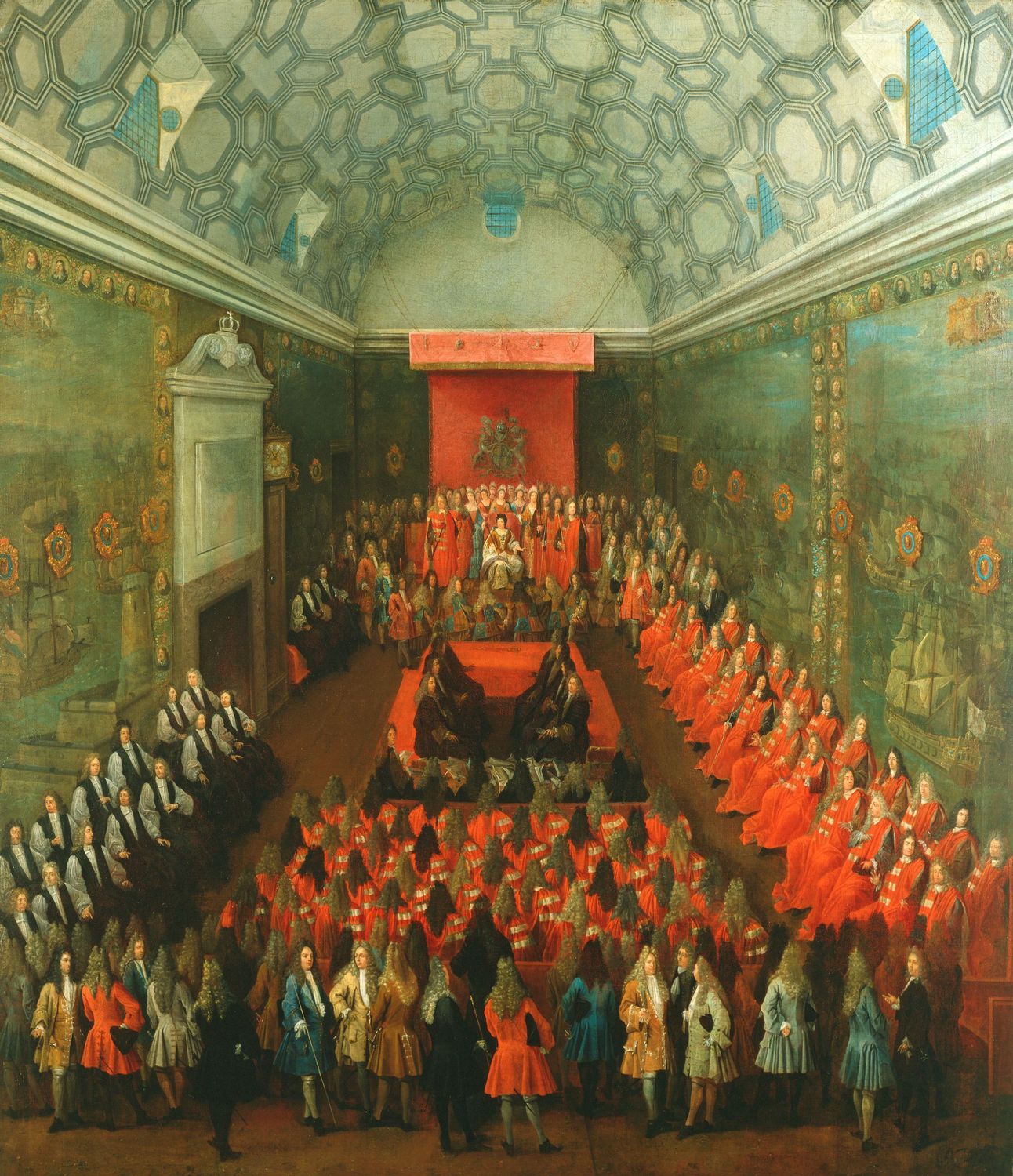
    Queen Anne making laws

    All in all it was a very busy Act of Parliament. And worth reading from time to time in an age when many people think that copyright is a tool to impede learning by preventing writing, withholding access, and inflating prices. Today we benefit from the public domain, and lively and diverse markets for old and new books, plus a public library system (albeit one under stress), and for those who can afford it digital access to writing of all kinds.

    But today’s faultlines are very visible. Instead of printers laboriously setting type, the new publishers are massive and almost instant copying machines, whose advertising engines are making unaccountable and unattributable money from the efforts of writers and creators. This widespread abuse is protected by a kind of enforced pseudonymity, which weakens not only the bonds between identity and authorship, but also our ability to hold each other accountable for our words and actions. And if creativity is flourishing on the horizontal axis, on the vertical, among the undoubted gems there is a viral outbreak of plagiarism and shallow re-use.

    So where the deficit at the start of the 18th century was a self-regenerating engine for learning, at the start of the 21st century we are looking at a deficit of civil discourse and authentic creativity.

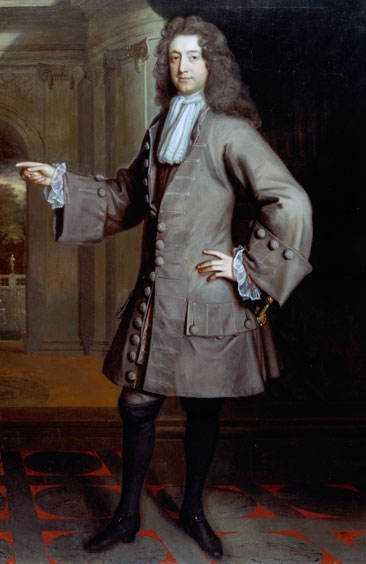
    The Lord Keeper of the Great Seal.

    It takes an historical imagination to understand why a late 17th scholar or parliamentarian would think that an Act to create copyright would encourage learning. The argument presented runs thus: Printers had been taking liberties, not asking permission before printing and reprinting, nor sharing the money they were making with writers. The lawmakers wanted to give writers a tool to negotiate a better deal with printers, and redress against infringements of their economic and reputational interests in their writings.

    Alongside the private interests of writers, the public interest was clearly represented in the text and new rights and obligations the Act created. No protection for either the writer’s or the printer’s property could be obtained without a gift to the public of three copies each to the most established libraries of the day. The Act also formalised the public domain, by setting limits on the term of protection. The public interest was further advanced by the establishment of a register of works, under rules which allowed open inspection by anyone who cared to look.

    The Act also added price control; if you thought a book was too expensive you could complain to any of a long list of authorities, including the Lord Keeper of the Great Seal and the Archbishop of Canterbury, who could decide what the fair price should be.

    So, here’s an attempt to frame a Statute for the 21st century. Excuse me while I adjust my wig…

    An Act for the Encouragement of Civil Discourse and Creativity by Vesting the Control of any Representation of Identity; and of the Use or Reuse of any Texts Images Sound Recordings Videos or any other Materials that may be Captured Copied and Transferred on Digital Services and Platforms; in the Person Represented by that Identity, and in the Original Creator of those Materials, during the times therein mentioned.

    Whereas Digital Services and Platforms have of late frequently taken the Liberty of enabling and encouraging the Original Creations of one Person to be copied by another Person without Notice or Permission from the Creator; and in Flagrant Disregard of Common Courtesy allowed one Person to masquerade as Another while denying any Person the Ability to be identified as the Authentic Creator of what they have made; and of allowing and enabling Anonymous Messages to be sent in both Public and Private preventing any Redress for Abuse or Plagiarism of the Counterfeiting of Works of Art and Literature and Music; to the Detriment of Writers, Artists, Musicians, and Others who live by selling Copies of their Creations; and to the Great Detriment of Civil Discourse between People; May it be Enacted that the True Identity of each Person as they are Represented on such Digital Services and Platforms, and the Authentic Origination of any of Such Materials as they Create or Make, and any Permissions and Notifications about uses of Such Materials shall be solely under the Control and Right of those Persons; and further that any Assignment of those Rights and Permissions to the Owners and Operators of Digital Services and Platforms shall be subject to Valuable Consideration and shall be Accurately Recorded, such Records being freely available to any Interested Person on Demand.

    If the sceptics are right we might well be coming to the end of the efficacy of copyright in the encouragement of learning. Times have after all changed, and printing presses are daily becoming less essential to the dissemination of knowledge and the exchange of ideas. But even if they are right, three hundred years is a pretty good run for an idea of how law and markets needed to be shaped, and we can apply the same approach and sound thinking to the deficits we see in today’s lives as they are lived on digital platforms.

    Today we need better ways to talk to each other in public, so that divisions move towards compromise rather than conflict. And we need support for creativity that is less at the whim of the owners of digital platforms, who can tweak whole classes of creators out of a living by tuning an advertising algorithm or changing some monetisation rules; and whose incentives are diametrically opposed to authenticity and originality of content if it gives the creator stronger pricing power. We should recognise a common interest in getting this right for the next three hundred years. Those 17th century printers moaned and whined about the enfranchisement of writers, but profited handsomely from the encouragement of learning that copyright brought.

  • Net Neutrality Won’t Help Music. Here’s Why…

    With the best intentions, some in the music industry are adding their voices to protest the US FCC’s rollback of net neutrality regulations. Keeping them won’t help the music industry; pretending it will means the real threats to open and fair digital markets will remain unaddressed.

    To recap, net neutrality, as it is framed in the regulations, stops your consumer broadband provider from making either prioritisation or access to your devices conditional on fees or other non-charging policies. It was motivated partly by some clumsy attempts by telecommunications providers to protect their voice traffic by blocking VoIP and other peer to peer protocols (without net neutrality rules Skype would have been a far less attractive acquisition for Microsoft). Small content providers saw similar threats from huge media businesses, and feared being priced out of their audiences’ home Internet connections.

    All this seems reasonable, but the concept of net neutrality – invented by a lawyer, not a technologist – is based on a very much oversimplified understanding of how the Internet works. It’s easy to assume that your consumer broadband provider connects to the Internet with everything else somehow magically taken care of. Indeed, many network diagrams just show the Internet as a cloud. Global connectivity is complex however and has changed a lot over the last 25 years.

    So how has the Internet changed, and why does it matter? The discrimination that many fear is already happening in many ways and many places, to the advantage or disadvantage of many parties. Please pardon a somewhat detailed history lesson, but it is important to understand just why net neutrality is not capable of addressing the concerns it pretends to.

    In the early days the Internet was made up of a fairly neat hierarchy of local, national, and global networks, referred to as tiers 3, 2 and 1. Lower tiers bought traffic capacity – known as IP transit – from higher tiers, and the tier 1 networks mostly just swapped data with each other at no charge. This business model drove investment in fibre and datacentres with relative agnosticism about what content and services were being carried.

    Telehouse in London's Docklands
    Telehouse, London

    One of the oddities of this arrangement however was that data sent between two near neighbours sometimes took a huge round trip to get to its destination. You don’t need to be a network engineer to see that exchanging traffic between UK networks in the UK should be quicker and cheaper than sending it across the Atlantic and back; in fact that was exactly the problem that led a group of UK ISPs to establish LINX, the London Internet Exchange, in 1994. Connection facilities such as LINX are known as Internet exchange points (IXPs). Initially membership of exchanges was limited to networks with roughly similar in/out traffic ratios, and costs were mutualised rather than individually billed between network owners.  The exchange of traffic is known as ‘peering’ – giving a sense of its cooperative heritage – and can be done privately between two or more networks, or publicly by plugging into shared data switches. The global network of IXP centres continues to develop.

    Internet architecture is designed to support peer to peer traffic, and each device can theoretically send to and receive from any other connected device. But as the net developed its commercial model, the traffic flows dramatically changed shape. More and more data was coming from specialised networks, such as CDNs (content distribution networks) and then from very large content distributors. The IXPs resisted at first, but then allowed these very asymmetric networks to join. In their quest to get ever closer to the consumer CDNs and content distributors quickly moved from public peering to private, investing in large capacity gateways to the bigger consumer ISPs. Then, as the consumer ISP market consolidated, the big content distributors started to install their equipment actually inside the ISP network, with private fibre connections to their own datacentres, a method known as colocation.

    This change was being discussed, as a ‘massive disruption’, in the network operator community by 2007. Here’s a paper on it by one of the real experts, Willliam B. Norton, and here he is talking at a conference:

    My own perhaps romantic take on this from 2012 is here: How Art Changes the Architecture of the Internet

    Today these three modes of connectivity co-exist:

    • Public peering – relatively low cost, mutualised and operated by membership of exchanges
    • Private peering – organised ad hoc between network operators, and often used for specialised needs in business to business traffic exchange
    • Colocation – extremely expensive and only available to a small club of the biggest content distributors

    To get an idea of the thresholds which drive traffic from one mode to another here’s a policy published by the UK’s national broadcaster, the BBC:

    Any peer exchanging more than 1Gbps of traffic in either direction at any public peering location will be requested to migrate to private peering, at our discretion.

    It should not be surprising that Google, Amazon, and Netflix are some of the biggest users of colocation, given the amount of video they ship to consumers. Here’s what Google says about their service:

    With our edge nodes, network operators and internet service providers deploy Google-supplied servers inside their network.

    Google has even installed its servers inside the Cuba national telecoms company, with now former chairman Eric Schmidt following close behind the Obama administration’s political normalisation efforts:

    The Empresa de Telecomunicaciones de Cuba SA ( ETECSA ) and the US company Google have concluded the talks with the aim of signing an agreement Google Global Cache (GGC).

    And here’s Netflix explaining just how powerful the economic forces are behind colocation:

    Globally, close to 90% of our traffic is delivered via direct connections between Open Connect and the residential Internet Service Providers (ISPs) our members use to access the internet. Most of these connections are localized to the regional point of interconnection that’s geographically closest to the member who’s watching. Because connections to the Netflix Open Connect network are always free and our traffic delivery is highly localized, thousands of ISPs around the world enthusiastically participate.

    We also give qualifying ISPs the same Open Connect Appliances (OCAs) that we use in our internet interconnection locations. After these appliances are installed in an ISP’s data center, almost all Netflix content is served from the local OCAs rather than “upstream” from the internet.

    So to understand today’s Internet it is important to have these three different models for how data gets into the consumer’s home; and to understand how the economics and incentives that drive their respective capacities and capabilities differ from each other; and most important of all, the balance between them, how they compete with each other, and the investment model that supports each of them. Because as traffic moves from one model to another – from IP transit to public, then private peering, then to colocation, the investment case moves too.

    The simple fact is that a colocated content distributor needs less private peering, and little or no public peering in order to reach its consumers. Traffic might still be growing across the internet, but with public peering growing slower there’s less money to invest in IXPs, and more money for what are effectively private overlays occupying the same conceptual space as the public Internet. It’s obvious which companies are involved; Netflix for instance, and Google, for its YouTube traffic. Netflix is not investing in public peering capacity; to do so would only benefit its competitors.

    But here’s where it starts to get a bit more interesting (sorry it took so long). Cloud providers too are colocating alongside their peering arrangements. This club includes Amazon and Microsoft, and Alibaba now entering the global market. Music companies are big users of the cloud, and if they are buying AWS, Azure, or Google Cloud each of them, no matter how concerned they might be about net neutrality, is benefiting from the advantages of getting out of peering and into colocation.

    Now consider this from the point of view of a consumer broadband provider. Your colocation partners are already on your network, and on very high capacity connections; they need it for their video streams. Your private peering partners are also connected to an extension of your network in a datacentre somewhere, and have as much capacity as they need, but are further away in network terms so are less reliable and efficient. Your public peering is now very much the poor relation; you have no control over the quality of the route that the publicly peered content takes before it arrives at your network, and while you need to maintain the connection in order to be able to deliver the whole of the rest of the Internet to your customers, it’s impossible to anticipate which connection a large file or video stream might come from, nor help it arrive smoothly and in one piece.

    Raphus cucullatus, Roelandt Savery (1626)
    Raphus cucullatus, Roelandt Savery (1626)

    So, in brief, many music companies are now providing additional revenue to the cloud providers, who are abandoning as fast as they can the mechanisms by which the Internet remains open and fair. And that does not just include record labels; many consumer music services have moved their systems to the big cloud providers.

    Here’s an ironic thought – an artist, a record label, and a distributor might already each be paying Amazon to store and process a track, in order to send that music to be sold and streamed by… Amazon!! There are more than twenty different ways that Amazon can extract revenue from music (sometimes in scalable and repeatable ways), and all but a few result in no revenue for the creators. It seems that the music industry collectively is doing as much damage as it can, as fast as it can, to the benefits that net neutrality is supposed to preserve.

    Business is littered with situations where the collective interests of a class of companies are in conflict with the individual interests of most of them. Usually the result is the development of monopolistic or monopsonistic markets; no industry benefits from the dominance of Facebook and Google in digital advertising for instance, but many businesses benefit hugely from the reach and capabilities of the data and marketing platforms. And the answer to monopoly is usually regulation, but for better regulation to work it is essential that the intended beneficiaries have access to the skills and knowledge to move profitably into any fresh opportunities that the new rules might bring.

    Can music make that move? As an industry we’re suffering from a brain drain out of the supply side and into the demand side, and there’s a lot of evidence that our trade associations and collective bodies are under-resourced to help such a change. But the game is far from over. In net neutrality, and in technology, the best approach seems to me to be the same as in so many other areas where we are looking at erosion of our freedom and agency. And that approach is a fierce and supremely well informed dedication to independence.

  • A New Social Contract For Music

    Music, in its various forms, has done quite well in the age of copyright. Digital technology has brought with it many tipping points, when old certainties give way to chaos before finding new stable states.

    Any new stability will rely, as copyright always did, on some strong ideas to act as a foundation on which we can share music efficiently and fairly with each other.

    We know what the old ideas looked like. Copyright is mysterious and complex enough to have its own creation myths which set the tone for the codes that followed them. One of the most romantic of these concerns the earliest surviving manuscript written in Ireland, a copy of a Psalter, ‘made in haste by night in a mysterious light’. The King is said to have ruled with the rustic phrase, ‘to each cow its calf’, that the owner of the original kept title in the copy. This is an elegant statement of the parental ideas behind the droit d’auteur and moral rights as any.

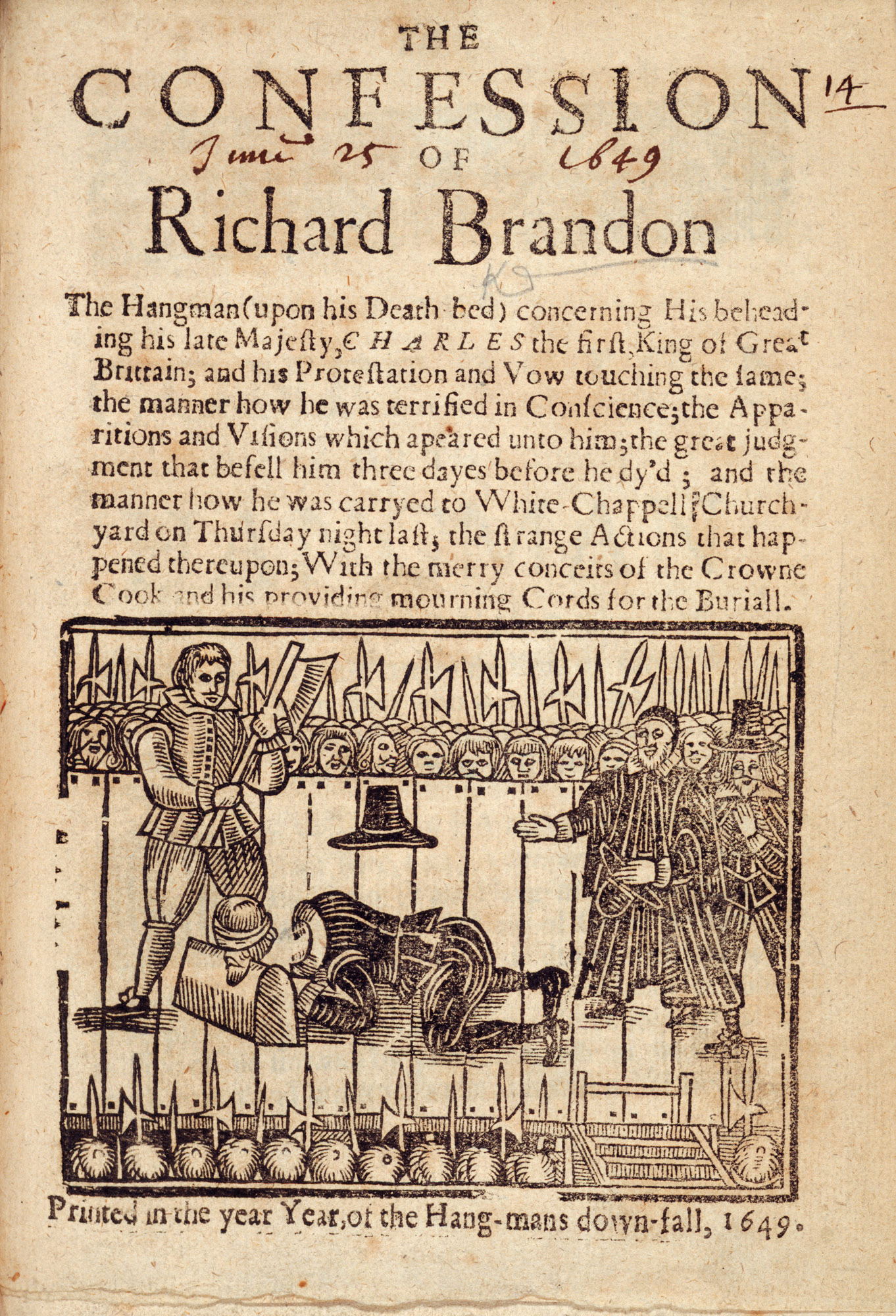
    A pamphletOther myths more prosaically bind copyright to printing monopolies and exclusivities granted by the 15th century Venetian senate. In mid 17th England similar monopolies granted by the king rather lost their force. The English Commonwealth was a regime that shut theatres and banned dancing on Sundays, an authoritarianism which saw copyright as a tool of political control, perhaps spurred by fear of the power of the pamphlet which had played so effective a part in the breakdown of the old order.

    The regime was rewarded by a powerful blast from no less a voice than John Milton, poet, moralist and political activist. Areopagitica was issued as a pamphlet to argue for the repeal of the 1643 Licensing Order, which Milton saw as an attempt to bring printing under government control. State censorship exercised through the printing press was, said Milton, tantamount to:

    the discouragement of all learning, and the stop of Truth

    Milton failed in his campaign. And this was the backdrop to the Statute of Anne at the beginning of the 18th Century, which was either a shoddy backroom deal between publishers and government, or an enlightened recognition of the natural rights of authors, depending on your tolerance for conspiracy and progressive optimism respectively.

    And so it remained for 300 years, with an ebb and flow between a strong sense of the fairness of giving creators control and reward, a continuing suspicion of corporate and commercial monopolies, and a general acceptance that the public too, expressed through access rights and term limits, has a stake in the game.

    This tension is even found in the Universal Declaration of Human Rights. The two clauses of Article 27 are hard to reconcile:

    (1) Everyone has the right freely to participate in the cultural life of the community, to enjoy the arts and to share in scientific
    advancement and its benefits.
    (2) Everyone has the right to the protection of the moral and material interests resulting from any scientific, literary or artistic production of which he is the author.

    The UDHR is a powerful statement of the rights of the individual which it seeks to protect when there might be a threat from cruel or repressive states.

    The primacy of the individual however is far from being a universality in copyright just as in the rest of human history. Mark Rose has argued cogently that until there was a grant of rights to the author as an individual there was little expectation of originality and therefore no sound basis on which to elevate mere scribbles to the status of property. Ideas of personal genius perhaps rest on the property right, and not vice versa.

    Corporate interests too can act in such a way as to cast doubt on the sanctity of a material interest in such as spiritual thing as creativity. All copyright owners know the dangers of overreach when enforcing exclusive rights against innocent infringers. We know that words and music are meant to be shared, not blocked; this is a cultural certainty ruthlessly exploited by platforms of mass participation. One might call this the revenge of Article 27(1): the corporate interests of the record company might deserve to be flouted, but the moral and material interests of the artist should be respected, a popular but unreconcilable discourse which plays out continually.

    The old paradigm suited an era in which education, production, distribution, and of course markets, used to be constrained to elites. Now perhaps half of humanity takes all this for granted. The 21st century is an inversion of the age that gave us the old style of copyright, and needs a new myth.

    So what new foundations might a new social contract for music rest upon? In an age of self-expression we should preserve strong rights for the creative individual. With so much of our public identity now digital it would seem absurd to allow the music we create and perform to be misappropriated; and those who suggest that authorship is too much of a technical challenge just need to consider the thousands of datapoints held about them in marketing databases. Of course your attribution rights can be respected, persistently, and if your identity can be known so can your economic interest.

    But alongside this we need to acknowledge that the idea of the lonely genius has passed into history. In some ways we are recovering our pre-copyright communitarian approach to creativity. Certainly Shakespeare expected to borrow and lend, and to collaborate where it was expedient. Today’s digital creative and casual producer of recordings can be inherently collective and collaborative, layering and modifying the material more than shaping the void. We should find ways to support and reward participation with the future life of creative works rather than seeking to preserve the creator’s control. And perhaps we should recognise collaboration as a joint endeavour – one for all and all for one – rather than the sum of several contributions.
    There is a danger here that each item could end up dragging with it an infinity of attribution and reward, or that free riders could pile into and dilute the success created by others, just as search terms and hash tags get hijacked in today’s social media. Perhaps we need to consider degrees of creation and originality, with secondary creativity very much a subsidiary economic right. We have precedents. There is a separate right of arrangement in musical works which does not need to be exclusive; there are many thousands of private contracts made each year around the use of samples in new recordings, which could perhaps be collectivised.

    Today we share, we participate, we have a strong sense of fairness, and we respect the individual. It’s important to recognise that we now have the digital tools to express all these ideas in our copyright framework, and even, thrillingly, to allow different copyright rules to co-exist and compete with each other for the affiliation of the best and most popular creators.

  • A Fair Way to Bridge the Value Gap

    The music industry says that artists, labels, and songwriters are getting a raw deal from services that allow users to upload content. The beef is that user-uploaded songs, which may generate advertising revenue for the service and the uploader, compete directly with those same songs uploaded by the copyright owner. The difference in revenue between a user upload and a professionally supplied version is what the music industry means by the ‘value gap’.

    And they don’t like it. As explained by record company trade body IFPI’s Frances Moore:

    The value gap is about the gross mismatch between music being enjoyed by consumers and the revenues being returned to the music community.

    Copyright terms and conditions always make the uploader responsible for any copyright permission or licences, but sometimes uploaders don’t have all the rights they need. If services remove the content promptly when asked they benefit from what is known as a ‘safe harbour’, and the copyright holder has no claim against them for infringement or loss of revenue.

    So what does the music industry want? Frances Moore again:

    The “safe harbour” regime designed for the early days of the internet should no longer be used to exempt user upload services that distribute music online from the normal conditions of music licensing. Labels should be able to operate in a fair functioning market place, not with one hand tied behind their back when they are negotiating licences for music.

    Unusually for the music industry the IFPI position has managed to generate broad support among artists and indie labels, as well as songwriters and publishers. Over 1300 artists have now signed a letter to the EC President Juncker, which you can read online here:

    The music industry is not calling for safe harbour to be abolished, rather that the qualification to benefit from it is drawn far more narrowly now that many platforms are less file hosting services and more media and advertising businesses. And the European campaign is mirrored by similar efforts in the US asking for changes to the DMCA safe harbour provisions.

    The pushback has been quick and predictable, and based on the same set of positions that have been rehearsed over the last 20 years of internet history. Some feel that copyright should be abolished, and artists who can play live should make money only from from ticket and tee shirt sales. Some suspect the campaign is just the biggest artists and labels wanting to add even more millions to their already vast riches. Many think that the music industry should share out more equally what it already has first before seeking to get stronger rights. Some think that over-zealous labels and artists are harming other creators by issuing unfair take-down notices.

    Legal sophisticates will recognise some important principles wrapped up in this debate. Citizens and consumers are clearly right to demand that an industry with unfair practices is not rewarded. And in a commercial environment in which only a tiny proportion of new work achieves a return on investment there is a balance to be found between the value of distribution and promotion to the creator, and the value of the content to the service. There are too a whole class of either inadvertent, incidental, and innocent infringements where the uploader has no intent to profit to the detriment of the musicians. The can be no possible justification for chilling such activities as saving something to read later, or sharing an extract or a link with a friend.

    But does the music industry have a point at all? The disparity in the money the music industry gets for the same consumer experience is real enough. IFPI calculated wholesale subscription revenue per user at just under $30 per year for 2015, while advertising brought in about $0.72 per user per year, albeit from a much larger user base. The advertising rates on UGC are generally much lower than on professionally supplied content, so where YouTube and other services are being used as a music jukebox the hit to music industry revenue from this competition is very significant.

    Internet advertising has its own set of issues quite apart from any music industry griping. We are learning that the cost of relying on advertising to support media generally is paid partly in greater intrusion into our private lives as trackers try to squeeze more value out of our daily traces mostly with nothing like informed consent. High quality journalism is expensive. It might be weakened even as more people have greater access to publishing platforms, with subsequent harm to political process and public life.

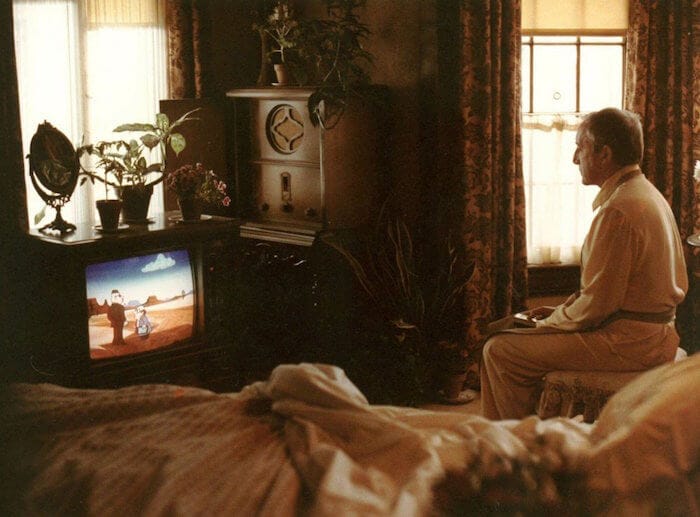
    Chauncey Gardiner -
    Chauncey Gardiner in ‘Being There’ -” I like to watch…”

    But of course there is no way to know whether all that intrusion is really necessary, or whether there’s more money to be found. The services currently benefiting from safe harbour have every incentive to increase their own revenue. Other old copyright businesses that are moving to internet economics seem to be suffering similarly, so it might just be inherent in the way internet media economics works. For an entertaining rant about this here’s Professor Scott Galloway:

    For me one of the ironies of the long standing conflict between copyright and internet businesses is that if copyright was a tech startup innovation it would be lauded as a thing of progressive genius. It would not be organised in national silos, nor looked after by people who refuse to cooperate with each other of course, but there’s no more natural way, in a world of infinite replication and trackability, to incentivise and reward creators. And that is what ad-supported UGC services do, through unique digital object ids, channels, and the massively complex world of consumer tracking and advertising markets.

    There is a great deal both sides can do to show they are fit for purpose. The music industry should finally deliver on the promise of digital technology and make it easy for everyone to identify and pay the creators and owners of the music, just like YouTube does with its own creators. Services need to show they deserve a safe harbour by demonstrating respect for the rights and privileges of everyone, from fair dealing student to striving artist to privacy deserving citizen. I would like to see the value gap closed by giving songwriters and musicians more say in the deals that affect their livelihoods, and by demanding more transparency from services on what they do with all of our data.

    (A version of this appeared on the ORG blog)

  • Pricing Music Fans in the New Data Economy

    In 2003 digital artist Angie Waller released a wonderful project she called ‘Data Mining the Amazon’. Asked about it by art community Rhizome Waller offered the following:

    I was surprised that books about military battles and corporate takeovers pointed to the soothing CDs of Enya and Sarah Brightman.

    Battle of Punta San Salvatore by Spinello
    The Battle of Punta San Salvatore by Spinello

    No record shop until Amazon had been able to capitalise on Enya fans’ interest in military history, and Amazon had the choice to do so explicitly – ‘people who bought this also bought’ -, or in subtler ways. Today Amazon is advertising Vanish Stain Remover to me alongside Enya’s latest album – you can draw your own conclusions about that.

    Traditionally, alongside selling records and supplying streaming services, the music industry sells music licences to restaurants and radio stations, where a band or jukebox plays to the diners, and a DJ spins the discs. The music station’s licence doesn’t apply to the talk station on the adjacent preset – despite being the same radio in the same car, this is metaphorically a different place. Perhaps luxury music attracts wealthy patrons, but it would be hard for the restaurateur to argue that the benefit spills down the street into the book shop next door. We’re often accused of being old fashioned. These models might as well be based on the classical unities described in Aristotle’s Poetics!

    Angie Waller’s art is amusing in its own right, but points also to a fundamental disconnect in the way we understand media, our experience of it, and the commerce that sustains it. Amazon could extend its advantage even further, by making the data it holds about the preferences and behaviour of all its customers available anywhere on the internet, and to anyone who was willing to buy it. We have moved from a model of attention which is constrained by time and space, to one which is fluid and portable.

    To understand this better, think about a normal journey to work. The music you listen to fits into a data-centric view of you as a person, and as a consumer. Your device knows where you live, and where you spent the night! It knows which apps you use, how you travel, where you work. All this data can be correlated with other data to build up a compelling picture of your daily needs and desires, the groups you belong to, and how you like to live.

    To the apps you use and the websites you visit on that journey you are now an identity and a cluster of data points, all derived from your stored preferences and histories, your digital fact pack, and your recent behaviour. Like a magnet being dragged through iron filings, these tiny packages of data stick to your profile, and are used to select new content to show you, to build your ideal music playlist, and to add value to your attention as your presence is sold to advertisers. The terms and conditions and privacy policies of music apps make this very clear. Here’s Pandora’s privacy policy, which sets this out in detail.

    Those apps and websites extend what Amazon was doing over a decade ago, and offer the new data they generate from your activity to other apps and websites in complex and dynamic marketplaces, where content and profiles are mixed and matched with marketing messages. It is in those marketplaces – some familiar names, such as Google and Facebook, many essentially invisible to the people they are tracking and selling – that music fans are priced and sold.

    Codes of conduct and some regulation has grown up around this tracking activity, including the Network Advertising Initiative, who offer a quick view on who knows who you are, which may be seen here. 67 NAI member companies are currently tracking my web browser, and ironically, by using the NAI tool, I expect I am informing them that I am interested in my privacy. Pandora refers people to TRUSTe’s preferences manager, with a tracker code which tells TRUSTe where you have come from. The EDAA monitors the activity of 111 companies, and helpfully shows a nice green tick against that ones who are successfully tracking you.

    What they all have in common is that none of them are really asking music fans for an informed permission to spy on them, and none are paying musicians for the data that music generates. Perhaps they shouldn’t. After all musicians made no extra investment or effort to create the technology and services that turn our traces into a marketable commodity, and music consumers get a convenient service at a lower price. This is a debate however we should have.

    So what is the price of a music fan to a seller of military books, or indeed stain remover, holidays, or health insurance, or any of the things the digital marketing industry is paid to offer us? Right now, we in the music industry simply don’t know, but it’s not hard to see that some of the bigger music platforms value their advertising supported tiers very highly. And what if the music industry had a stake in that game? If we had the tools to participate in the revenue it might turn out that ‘free’ is much more valuable than being locked up in a $9.99 subscription service. The implications of this discontinuity in time and space could be truly revolutionary.

    In the new music industry we need to understand the value that music creates in the data economy. But more importantly we need to have a conversation with the music fans themselves, because it’s their data, not the platforms’ and not the musicians’. We have a unique opportunity to stand alongside the people we reach with music, and make their privacy a condition of doing business with us. If we get this right, music can once again represent a free mind in a world of exploitation.

  • One Music Copyright Can Be Better Than Two

    Music copyright was developed in nineteenth century France as a response to an obvious unfairness. Bars and restaurants could hire musicians to entertain their customers, raising sales and profits. The restaurant owner benefited, the musicians got paid, but the composers got nothing. No credible argument was offered that the sheet music sales or future commissions were enough to justify free use of music. Civilisation (represented by the French law courts) demanded that composers should share the economic value their music created.

    This was of course long before the advent of sound recording technology, and the emergence of the music recording industry. The principle of tradable rights in the activities that generate revenue, either directly or indirectly, was later carried across to this new class of recording producers and performers. The assumptions on which these rights rested were clear and simple. A composer created a work, some musicians performed it, and it was enjoyed by the public either live or recorded. The recordings could be replicated and the copies sold, and the interests of the parties survived throughout the web of economic activity.

    It turned out that some composers were also excellent performers, and some made recordings of their own and others’ music. The separation of interests nevertheless gave composers, whose interest is mostly in having more performances and recordings of a work rather than fewer, an important protection. Coercion to leave the market free of competition for a new waltz, or a new song, is always a danger; attempts would amount to restraint of trade so the system protected against such conflicts of interest quite well.

    Students of 20th century music will know however that the recording process developed in ways that were far more creative than anticipated. Magnetic tape proved to be a flexible and compliant medium, allowing for delay, loops, multi-tracking, and cut and splice. Electronics made it possible to alter sound, extending what could be achieved through mechanics and acoustics. And then the digital revolution exploded the world of possible sound, handing musicians a superabundance of tools, tricks, and techniques.

    And so it is that in the 21st century the recording and the composition are often one and the same; a single creative work, by a single person or creative team, frequently involving nothing that could be recognised as a traditional musical performance. No musical notation or instruction set pre-exists the creation, and any notion of a tune and harmonic structure is left to be extracted after the fact. Consequently the likelihood of other performances and other recordings is greatly lessened. But the world of copyright really struggles to provide an efficient way to manage these creations.

    Copyright insists on the separation of composition and recording even when none is asked for or indicated, and this creates massive inefficiency and absurdity in licensing and payment. For musicians who don’t know their way around the industry it’s easy to miss out on a percentage of each and every sale or stream as the compositions side is licensed through a complex international network of societies and agencies representing music publishers. Even with good administration each unique sale or stream creates a secondary flow of money which moves mysteriously (and slowly!) around the world, in contrast to the normal monthly accounting and payment cycle for the recordings.

    The suggestion therefor is that, at the creator’s option, a new unitary copyright in the combination of composition and audio object could replace the dual system that causes so many inefficiencies. Until and unless a composition is extracted and performed separately no other rights would be needed to ensure that the creators have the control and compensation that is now so imperfectly effected. These new rights could swerve the traditional music publishing world entirely, saving huge amounts of unnecessary data and processing. Using someone else’s composition and claiming a unitary right would of course be fraud, and a much more serious and risky offence than infringement. New technology is anyway in the pipeline to identify music similarly to how audio fingerprinting identifies recordings. A fingerprint of the original master file could provide the basis for highly reliable proof of title, and form the basis of a combined supply chain and royalty payment framework.

    Such a new right could happily live alongside today’s dual system, using just enough of the existing infrastructure as necessary, and no more. In a world of fragmentation and disputes, where even the biggest music users claim not to be able to identify many of the creators who deserve and need payment for their work, a simple and commercial solution is overdue.

  • Change How We Think First, Technology Second

    Many years ago I was asked to discuss with the board of a trade association how the music industry was changing. One prominent executive summed up by saying “complexity has served us well”.

    A few days ago Spotify’s James Duffett-Smith was moved to exclaim “music industry licensing and copyright structures are legendary in their complexity” in a blog post on how the company is responding to a mini-crisis in royalty payments. What bit Spotify was no conspiracy to defraud on a grand scale, just a simple expression of the inherent laziness of the music industry, and its abiding ability to move problems to where they are hardest to solve.

    Let’s clear up some fundamentals before trying to understand how we might help ourselves towards a better and cleaner approach to bad data. Duffett-Smith oversells complexity. The basics of copyright and licensing are simple enough. Somebody writes a piece of music, somebody performs it, someone records it, and someone plays the record. A play of the recording usually involves permission and payment to the people who contributed. There are only a few permutations of this basic requirement, and in fact the music industry and governments have over time found ways to simply even further through block licensing and some limited, mostly benign monopolies.

    Some complexity in how rights and contracts are managed however enables musicians to offer the right kind of permission at the best price, rather than having to accept a single flat rate for an impoverished range of uses. This finds its best expression in the use of music in films and advertising, where a great song can transform a movie or sell millions of pairs of jeans. Neither Spotify nor other music services, nor public radio and most TV producers, nor indeed bars, hairdressers, garages etc., have to worry about such matters. They get simple commercial or collective licences.

    But even after 15 years of the data driven 21st century the music industry has not yet managed to create a coherent supply chain. So music services get their information about the music they play from two sources, which do not cooperate to ensure either accuracy or completeness. And it’s not because they can’t, it is because they won’t.

    Those two sources of data are the owners of the recordings on one side, and the owners of the compositions on the other. For very good reasons the rights and royalties for these two groups have taken different paths; songs and records have a Venn diagram of interests, and they need some protection from each other, even though in many cases the individuals concerned are the same.

    But when it comes to supply chain and data management, the industry has built silos. There is no matching of data between the two sides before the tracks are sent into the market, and no collaboration before the official release date to make sure the songs and songwriters for each recording are properly identified. And the law excuses this, fully transferring the risk to the point where the music is played.

    Observers will note an irony here, as the music industry is notorious for its high profile plagiarism court cases. And added to this there is a fundamental right to attribution in most copyright codes (reinforced by an item in the UDHR) which is ignored on an industrial scale by the industry that most stands to benefit should it be universally respected.

    I have argued elsewhere for a simple tweak to either law or industry practice that would see us indemnifying parties which rely on the data we provide about our music and our rights. This seems to me to be simple good sense. But there is an ethical dimension to the question too, for it is surely everyone’s right whether they are a musician, or any other kind of creator, to be identified with their work wherever it is performed or exhibited. And that is the change in thinking we need in the music industry, to a cultural norm where to hide or omit the creators’ due credit is seen as the shameful and lazy act that it truly is.

  • The World Is Singing A New Song

    We live in an age of everyday activism, with every purchase an expression of values as well as needs. Ideas about fairness go far beyond the impact of certified fair trading schemes; they permeate consumer marketing. Social media drives a radical transparency in supply chains, with no exploitation tacitly excused.

    Alongside fairness we have discovered a new appreciation of the craft skills and tradition wrapped up in the idea of an artisan. We know that we can be fed and clothed, and that our homes can be furnished and decorated by machines. At some point however we lost the sense that mechanisation is progress, and what came to the surface is the powerful idea that all economic transactions are a medium for human communication. A loaf of bread is now, somehow, a laying on of hands as well as nutrition.

    A musician playing an instrument or singing with real skill and feeling is the very definition of an artisan. The century we’re in could have been made for musicians, whose work delivers all the meaning of a transaction with none of the burden of common wants and needs. If this seems too much of a stretch, consider a cup of fair trade coffee. How much does the ethical content really improve the world? Or how much is it just an excuse for a caffeine dose in a disposable cardboard beaker?

    We in the music industry should not get carried away with enthusiasm for ideas that are easy to express but much harder to live up to. Some voices are now mooting a ‘fair trade’ approach to music. It is very hard indeed to see the parallels between the life of a musician in a G7 economy, and the fate of a worker on a coffee plantation. Nor would the Walk Free Foundation find many major label recording artists among the 35.8 million slaves it works so hard to free.

    Fair trade and authenticity in the music industry have to start from a very different place, and it will need the kind of grinding attention to detail that we have in abundance, but have not so far deigned to put on display. Today it is hard to find out who created a song, and who played the instruments. Such credits as there are don’t really tell the whole story. Was the performance recorded simply and directly, or did a studio wizard remanufacture it into something entirely wonderful but different? If we answer these simple questions we create trust, and trust is the foundation of both fairness and authenticity.

    But this comes with a warning. We won’t be correcting a great social injustice by going down this road, and we should be very careful not to wear the clothes of the genuinely oppressed and suffering. Fairness in music comes when everybody’s contribution is acknowledged and everybody’s rights respected; it’s not an argument over percentages of a payout.

    We have to admit in music that we are years away from the time when we can stand behind a full set of credits for a recording and swear that they are complete and truthful. Our audience, and consumers, have in many ways gone ahead of us, and it’s they who are singing a new song. We need to sing in harmony with them. It’s simple commercial good sense, as well as the right thing to do.


  • Europe’s Digital Single Market is Good for Music

    Accustomed as music companies are to territorial licensing, pricing, windowing, and marketing it is understandable that there should be at least scepticism if not outright hostility to the European Union’s Digital Single Market strategy. Swedes with an average GDP (PPP) per capita of $45,000 can afford more music than Bulgarians with $15,000. It doesn’t take much imagination to understand that the inequalities in such a large and diverse market make it hard to price a service or a product which is available to all.

    These inequalities are unsurprisingly reflected in the relative sizes of Europe’s national music markets, with Germany and the UK each more than half as much again as third place France, then a long drop to fourth place Italy. Populations and the size of the economy and the amount of discretionary spending are relevant of course, and it’s gratifying to see that the UK is second only to Japan in the amount spent per capita on music. The wide disparity in the size of the market as a whole and the per capita spend is illustrated well by the fact that the US is only fourth largest in the latter, while being the leader by far in the former.

    There might be many reasons why, even corrected for purchasing power and the availability of discretionary weekly cash, some cultures buy more recorded music than others. In some places music is universally considered an appropriate gift, and record tokens or gift cards deal with the preference problem. Historical differences in economic development mean that the dominant vectors for recorded music are much less present in some countries (and this is why universal high speed broadband is so critical for Europe’s cultural industries).

    But what would a European digital music market look like? It would start out at about €4b, or roughly the size of the US market. But it would have 500m consumers, versus 300m for the US, and a per capita GDP (PPP) of a very respectable $36,000. It would also have two powerhouse centres of music export excellence, in the UK and Sweden, and the benefit of an extraordinary array of local and regional cultural support programmes.

    Back of an envelope maths says that is already an additional €0.75b just by taking away artificial barriers (GEMA, I am looking at you). Other positives might come from innovation, particularly in finding a way to address the less wealthy areas with affordable products and services, without undermining pricing for the higher end. If Europe can crack that there are a few more continents that could prove excellent importers of both music and the digital services and technology that sell it. The necessity of being multi-lingual and serving a very rich and diverse set of cultural preferences would surely give Europeans a strong advantage over the parachute business model strategies of our friends across the pond.

    Even more, where there is already excellence in copyright administration and the digital skills that drive value, a larger internal market would strengthen the good and drive out the bad. Why would local artists trust their careers and livelihoods to inefficient and corrupt collecting societies if they could just join the best and get paid for the world’s biggest music market from one source? And perhaps regional diversity would re-create the middle class of record labels that provided so much value, before they were destroyed by the wave of enfeebling consolidation that left us with two and a half global businesses in a market a third the size it was at the millennium.

    If Europe’s politicians are wise they will consider not the interests of those global businesses, even if one of them is headquartered in Paris, but rather regulate for the music industry we could have. One that has more opportunities for artists, no matter where they are from, and one that takes advantage of our diversity as well as our size. I can only see good in a European digital single market for music.